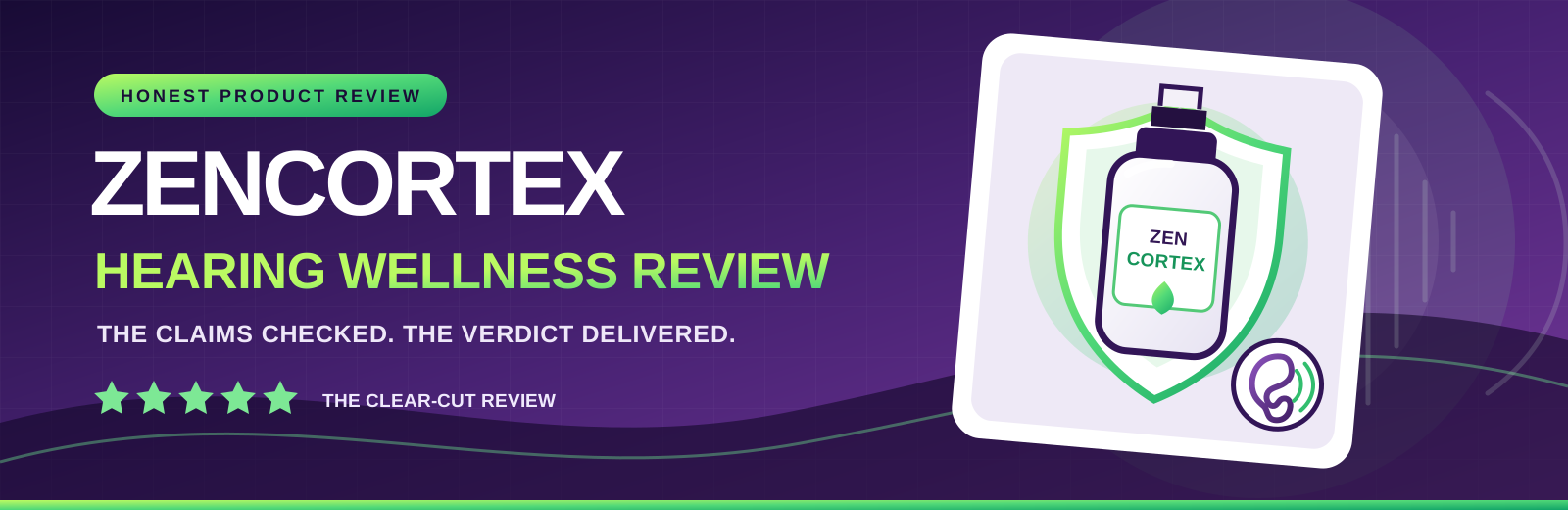
How ZenCortex Supports Auditory Health to Ease Tinnitus Symptoms
If you live with tinnitus, you already know how quickly it can steal your attention.

If you live with tinnitus, you already know how quickly it can steal your attention. It can show up as a thin hiss at night, a ringing after a loud event, or a steady tone that makes quiet feel heavy. What makes it so exhausting is not only the sound, it is how long it can linger, and how much it can influence your sleep, focus, and mood.
I have seen plenty of people try the usual paths, and I have also watched them get stuck waiting for a “silver bullet” that never arrives. Tinnitus relief is often less about eliminating a sound instantly and more about reducing the conditions that keep the auditory system stuck in a sensitive, reactive state. That is where ZenCortex enters the conversation for many readers who are searching for natural support for hearing and tinnitus, with an emphasis on ongoing auditory care.
Why Tinnitus Feels So Persistent
Tinnitus is not one single condition. It is a symptom that can come from multiple places, and the pattern can vary widely from person to person. Some people notice it most in quiet rooms. Others hear it louder after stress, poor sleep, caffeine, or a busy day that strains their ears and attention.
In practice, I think about tinnitus as a loop. Something shifts the auditory system, then the brain works hard to interpret or monitor that change. If the system stays on high alert, the sensation becomes more noticeable and harder to ignore.
Several experiences tend to repeat:
- After noise exposure, tinnitus can settle but remain “available,” meaning it returns when the ear is stressed.
- Under mental load, people often report the sound rises in prominence, even if it is not physically louder.
- Sleep disruption worsens the pattern. A tired brain spends more time scanning for threat, including internal sensations like ringing.
The key point is that tinnitus can be both sensory and attention-driven. When you treat it that way, relief becomes more realistic, because you are targeting the loop, not only the sound.
What “Auditory Health Support” Should Mean with ZenCortex
When people ask about ZenCortex, they are usually trying to understand whether it is intended as a gentle, supportive approach for the ear and auditory system, rather than a harsh, symptom-bashing plan. That matters, because tinnitus often fluctuates. A support strategy that respects that variability is more likely to feel steady and workable.
ZenCortex auditory benefits are discussed around supporting the auditory system's stability, especially for those looking for ZenCortex for ear auditory care as part of a broader tinnitus relief routine. In plain terms, the goal is to promote a calmer auditory experience, so the ringing feels less dominant over time.
What I look for in any auditory support plan is consistency and fit. Some people want something simple that they can take without constantly adjusting everything else. Others prefer a careful rhythm, where they pair support with ear-friendly habits and track what changes.
It is also wise to be honest about expectations. Natural support for hearing and tinnitus is not a guarantee of instant silence. For many, the win is quieter moments, fewer flare-ups, or the ability to stop the sound from pulling focus the way it used to.
A Practical Way to Tell If Support Is Helping
If you are considering ZenCortex auditory health benefits, do not judge it only by one night. Tinnitus can change hour by hour, and a good day can mask a poor pattern underneath.
Instead, try a simple check that most people can stick with:
- Pick one time window, like evening wind-down, and notice whether tinnitus feels less noticeable.
- Track sleep disruption on a simple 0 to 10 scale.
- Write down what you were exposed to that day, like loud music, headphones, or a long noisy commute.
- Note stress levels. Even a quick check helps, because stress can amplify perceived intensity.
Over a couple of weeks, you start seeing patterns that a single “does it work yet?” moment cannot reveal.
The Role of Day-to-day Ear Care in Tinnitus Auditory Symptom Relief
Even when someone is committed to a supplement like ZenCortex, tinnitus relief rarely happens in a vacuum. The ear is living tissue, constantly adapting to how we use sound, how we protect against noise, and how we recover after strain.
That is why I encourage readers to think of auditory care as an ecosystem, not a single product.
Here are a few habits that tend to matter when tinnitus is in the picture, especially when you are pursuing ZenCortex for ear auditory care:
- Keep headphone volume conservative, and shorten long sessions.
- Take intentional quiet breaks during noisy workdays.
- Watch what your body does with stimulants, especially late in the day.
- Protect against spikes in noise, not just sustained exposure.
- Treat sleep like part of your auditory plan, not an afterthought.
The trade-off is that you will probably feel less “complete control” than you want. Some tinnitus flare-ups still happen. But the goal is to reduce frequency and intensity, and to keep your nervous system from reinforcing the alarm response.
When Tinnitus Is More Reactive Than Constant
A common scenario I hear is this: tinnitus is manageable during the day, but it escalates at night. Quiet amplifies it, and the brain shifts into monitoring mode when there is less external sound.
In those cases, pairing auditory support with a calming evening routine often makes the plan feel more humane. Many people use gentle background sound to reduce contrast, then focus on sleep quality and ear-friendly habits earlier in the day. If you are trying to evaluate tinnitus auditory symptom relief from ZenCortex, that evening pattern is a useful place to watch for improvement.
Staying Grounded, Listening to Your Body, and Using ZenCortex Thoughtfully
I always recommend approaching tinnitus support with care, because the “right” plan is personal. What helps one person can feel underwhelming for another, especially if their tinnitus has a different trigger pattern.
When you consider ZenCortex auditory benefits, think about fit in three ways.
First, consider your triggers. If your tinnitus spikes after noise exposure, your top priority should include consistent protection and volume control. If it spikes around stress and poor sleep, the routine has to support nervous system recovery too.
Second, consider timing and consistency. Support strategies work best when you give them a fair window and avoid constant changes. If you switch products or add multiple new variables at once, it becomes hard to tell what is actually helping.
Third, consider how you feel emotionally. Tinnitus can cause frustration, and frustration can create a tighter loop around attention. Relief often starts as “less controlling,” not necessarily “gone.” If you notice you are checking the sound less, sleeping easier, or returning to tasks sooner after you notice it, that is meaningful progress.
Finally, if your tinnitus comes with new hearing loss, severe dizziness, or sudden changes, it is important to seek professional evaluation promptly. Support can be part of your wellness plan, but it should not replace medical care when symptoms shift dramatically.
What “Ease” Can Look Like When Tinnitus Support Is Working
The word “relief” can feel loaded when you are living with tinnitus. You might picture silence, but often what improves first is your relationship with the sound.
For some people, easing means the ringing becomes less prominent in quiet spaces. For others, it means the sound still exists, but it stops stealing focus. And for others, it is the sleep win that changes everything, because better rest reduces the brain's threat scanning and makes the day feel more stable.
ZenCortex for ear auditory care is often considered by people who want a steady, supportive approach alongside ear-friendly habits. If that aligns with you, the most helpful mindset is patient and specific, noticing changes in sleep, attention, flare frequency, and how quickly you recover when tinnitus shows up.
Tinnitus can be stubborn, but it is also responsive to how we support the auditory system and the nervous system around it. If you approach it like a loop you can soften rather than a problem you must instantly defeat, the path to quieter moments becomes clearer.